Table of Contents
Ask any media planner what they do all day, and the honest answer is this: we try to spot value before everyone else does.
It’s rarely glamorous. It means looking at a property, a platform or an audience and asking one simple question: is the price still catching up to the attention? When the answer is yes, you move. When the answer is no, you save your client’s money and look elsewhere.
Right now, women’s cricket in India is one of the few places where the answer is still yes.
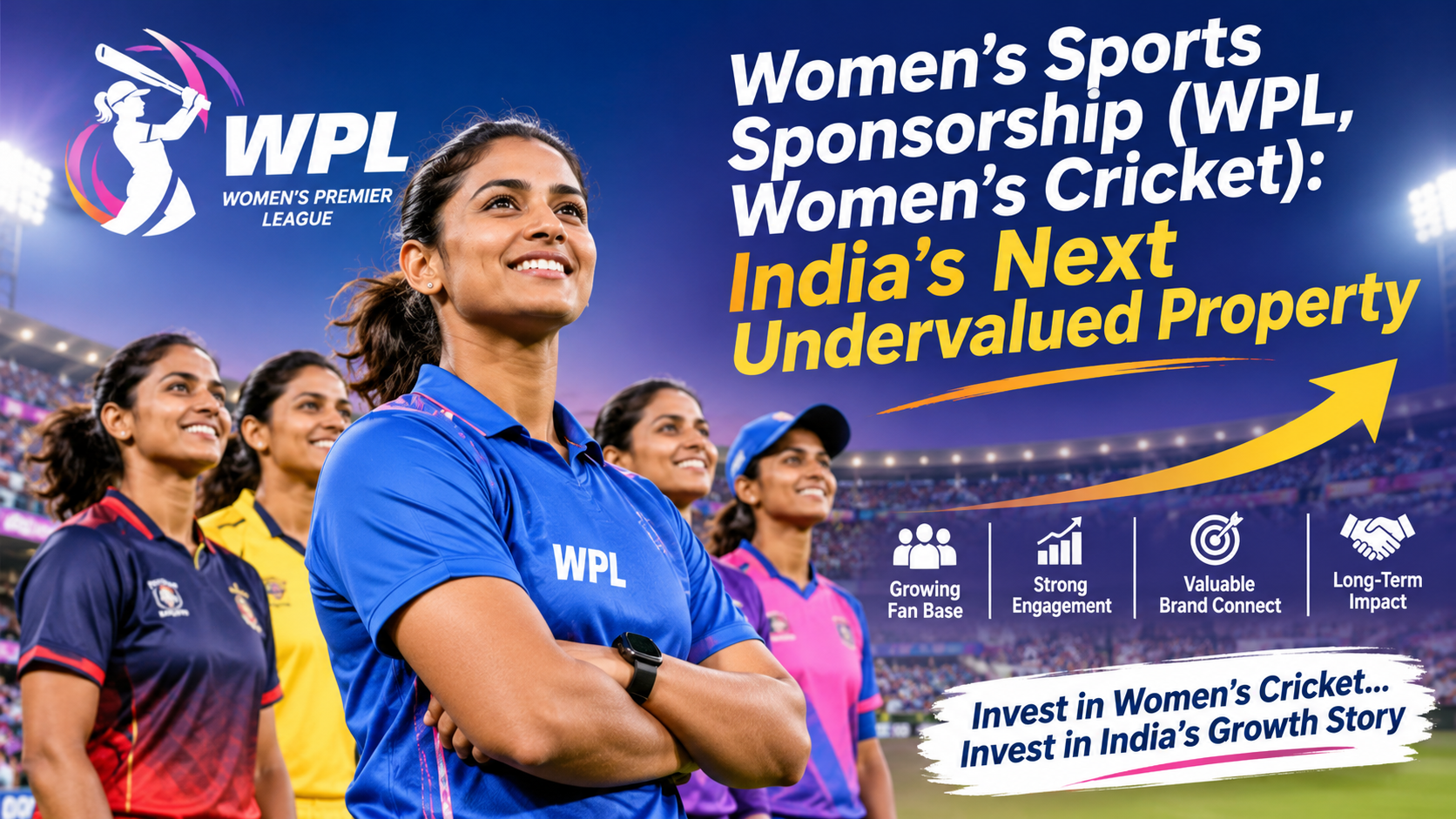
If you’ve been watching the WPL from the sidelines, wondering whether it’s a real media opportunity or just a feel-good story, this piece is for you. We’ll walk through what has changed, who has already moved in, what the audience really looks like, where things can go wrong, and how to build a sponsorship that earns its place in your budget.
A year that changed the conversation
Not long ago, women’s cricket in India had talent, passion and not much else. There was no proper league, no regular prime-time slot and very little commercial backing. Brands that supported it mostly did so to make a statement.
Then the Women’s Premier League arrived in 2023, and things began to move. Fifty-odd brands associated with that first season, but if we’re being honest, most were testing the waters. Curious, a little cautious, ready to step back if the numbers didn’t show up.
They did show up. Viewership has more than doubled in two years, from roughly 152 million in the first season to about 325 million in 2025. Then came the moment nobody in the industry will forget. India won the Women’s World Cup, and the final drew a cumulative audience of around 446 million, a figure that matched the men’s T20 World Cup final of 2024.
Read that again. A women’s final pulling the same audience as a men’s global final.
For anyone who plans media for a living, that’s the moment the category stops being a “nice story” and becomes a line item.
What changed is why brands show up
Here’s what we find most interesting, and it’s something the raw numbers don’t capture.
In the early days, brands came to women’s cricket for the narrative. Empowerment, inclusion, the right thing to do. Those are good reasons, but they’re not reasons that survive a budget review.
Today, the conversation in boardrooms is much more practical: What do we get per rupee, compared with our other sports, OTT and digital buys? The sponsorship decisions around WPL 2026 are being made on ROI expectations that are far clearer than before. And that is a good sign, because properties that can stand up to a finance team’s questions tend to last.
You can see it in the sponsor list. The broadcaster alone signed 15 sponsors for the 2026 season, up from 10 the year before. The categories are strikingly varied: FMCG, beverages, consumer tech, banking and fintech, autos and EVs, jewellery, and even AI. Names like SBI, BHIM UPI, Kalyan Jewellers, Kingfisher and Amul sit alongside a few you wouldn’t expect. A building-chemicals brand, Pidilite’s Dr. Fixit, came in as the official umpire jersey partner. Three years ago, that sentence would have sounded like a joke.
And that’s the real signal. If you sell tyres, cement, insurance or software and assumed women’s cricket wasn’t for you, the sponsor list suggests otherwise. The advertisers are no longer only women-facing brands. They’re brands that simply want a credible, high-attention audience.
Let’s talk about the audience, because it surprises people
When we discuss women’s sport with marketing heads, there’s often an assumption that the viewers are mostly women. In practice the picture is more interesting.
Industry estimates suggest that close to 60% of WPL viewing comes from men, and a lot of the recent growth is coming from younger viewers, roughly in the 15 to 22 age bracket. At the same time, urban women make up close to half of the fan base, and they are exactly the kind of decision-makers many brands want to reach.
So you get a young audience, a mixed audience, and a very engaged one, all watching live. That’s a rare combination in a media landscape where attention is scattered across a dozen screens.
A small caution. Audience figures from different sources use different methods, so treat them as a direction rather than an audited truth. When you’re close to signing, ask your partner for audience composition on a like-for-like basis. It’s a simple request, and a good partner will have no problem with it.
Why we call it undervalued
“Undervalued” gets thrown around a lot in marketing, so let’s be specific. A property is undervalued when the audience, engagement and goodwill it delivers are worth more than the price being charged for them.
Women’s cricket fits that description for a few reasons.
It’s early. The WPL is only four seasons old. The most recent edition ran from January 9 to February 5, 2026, across 22 matches. Think about how long the men’s game took to build its sponsor depth. Early partners in any league usually get better placement, stronger category exclusivity and more flexibility at the negotiating table.
You can still shape the story. In a crowded property, sponsors compete for attention. In a younger one, a brand can influence how its story is told. One broadcaster leader summed up the mood well: brands now want to build with the WPL, not just ride the wave.
The players are still affordable storytellers. Top women cricketers are reportedly commanding endorsement fees in the range of ₹1 to 2 crore a year, with more growth expected. That’s a fraction of what leading male cricketers charge, and after the World Cup, these athletes are household names.
Trust comes with the territory. Women’s sport has a reputation for grit and honesty, and audiences tend to extend some of that goodwill to the brands that backed it early. You can’t buy that through a standard ad insertion, however big the budget.
The window is open, but it won’t stay that way
Here’s the part where we’d be doing you a disservice if we only told you the good news.
Prices are moving. Ad rates for the WPL have reportedly gone up by somewhere between 30% and 40% after the World Cup, depending on whom you ask, and overall sponsorship spend for the 2026 season was projected at around ₹130 crore. The exact figure varies by estimate, but nobody is arguing about the direction.
Compared with the IPL, women’s cricket still delivers a very large audience for a fraction of the media investment. But the gap is narrowing. If you wait three more seasons hoping for certainty, you’ll probably get the certainty and lose the pricing advantage along with it.
That’s the trade-off every planner faces: certainty or value. Rarely both.
What good sponsorship actually looks like
We’ve seen plenty of sponsorships that failed, and they usually fail the same way. The brand paid for presence and forgot to build a story around it. A logo on a jersey is not a campaign. It’s a logo on a jersey.
The brands doing this well in WPL 2026 are thinking differently. Take the UP Warriorz franchise. Instead of collecting sponsors at random, it built a portfolio where the messages fit together: empowerment in the jewellery category, the idea of lifelong journeys in travel, and so on. The result is a sponsor line-up that feels like one coherent experience rather than a row of unrelated badges. That coherence helps recall, and it builds real loyalty among fans.
More broadly, the shift across the league is from “where do we put our logo?” to “what story can we tell here, and for how long?” Brands are moving beyond jerseys, towards story-led content, and committing to longer partnerships with women’s teams. That’s the pattern worth copying.
Five questions to ask before you sign anything
If you’re a brand manager or business owner considering a women’s sports partnership, whether at league, franchise or athlete level, work through these before you reach the contract stage.
1. What are we actually trying to achieve?
Awareness, youth reach, trust, employer branding, and lead generation are all legitimate goals, but each needs a different structure. A bank trying to build credibility with young earners shouldn’t plan the same way as a beverage brand chasing trial.
2. Which rights really matter?
Jersey and stadium branding are the obvious ones. Often the better value sits elsewhere: broadcast integrations, digital content rights, player appearances, behind-the-scenes access. Negotiate for content, not just visibility. That’s where the story lives.
3. League, franchise or athlete?
League and broadcaster deals give scale and credibility, and they cost more. Franchise partnerships give regional depth and more creative control. Athlete partnerships give a human face and remain relatively affordable. Many of the smartest plans combine a modest league presence with a deeper franchise or athlete story.
4. How will we know it worked?
Impressions and logo seconds are the easiest numbers to collect and the least useful. Decide up front what you’ll track: brand lift, branded search, social conversation, footfall, leads. If you want to go deeper on this, our article on Measuring ROI in Sports Sponsorship: Beyond Visibility and Logos covers it in detail.
5. Are we staying for more than one season?
This is the one we’d press hardest. Audiences notice quickly when a brand turns up for one season of good press and quietly disappears. If you can’t commit to two or three seasons, and to a marketing budget around the sponsorship (not just the rights fee), it may be better to wait.
The risks, said plainly
Every honest planner should be able to list the risks of a recommendation. Here are the ones we’d flag for this one.
- Price creep. The longer you wait, the less of the early-mover advantage remains.
- The post-World Cup glow. Part of today’s excitement comes from a historic win. In a quieter cricket year, some of that heat may cool. This is exactly why steady, multi-season investment beats a one-time splash.
- Messy data. Numbers from different sources don’t always match. Use them for direction, and push for audited data when it’s time to negotiate.
- Tokenism. If your own culture doesn’t match your message, the sponsorship can backfire. Do you pay women fairly? Do you support women in your own teams? Audiences notice the gap between what a brand says and what it does.
- Too much cricket. Cricket dominates women’s sport in India right now. That’s fine for reach, but brands with a wider mandate should keep an eye on other women’s leagues and events as they develop. We’ll be writing more on non-cricket properties soon, including Beyond Cricket: How Indian Brands Are Finding ROI in Football, Kabaddi, and Emerging Sports Properties.
What this means for your kind of brand
If you’re a large national brand, you can afford league or broadcaster-level presence. The opportunity isn’t to be one more logo in the line-up, but to carve out a distinctive position. Think category exclusivity and content ownership.
If you’re a mid-sized or regional brand, franchise-level partnerships in the cities where you operate can deliver outsized local impact. A regional brand that is the visible, consistent partner of a local women’s team can own that relationship in a way a national sponsor never will.
If you’re a challenger or D2C brand, women’s sport suits you well, because it rewards authenticity more than budget. Athlete partnerships, content collaborations and community activations let you punch above your weight.
If you’re in B2B or an “unexpected” category, the umpire-jersey example shows what’s possible. A memorable, relevant integration can make you more visible here than a larger spend elsewhere.
Where it sits in your media plan
A quick word on positioning. Women’s sports sponsorship isn’t a replacement for your core media. It works best as a high-attention layer on top of a solid plan, giving your reach and performance buys some context and meaning.
In practice, it pairs well with:
- Always-on digital and performance marketing, to convert the attention that the sponsorship creates.
- OTT and connected TV, since viewing is fragmenting across screens and the smartest sponsors balance mass reach with contextual, high-attention moments.
- Regional media, where franchise-linked activations can be amplified in local languages.
If you want a refresher on how cricket fits the wider picture, our earlier piece, Cricket and Branding: Why Sports Remains a High-Impact Channel in India, is a good place to start.
Beyond the numbers
It’s easy to talk about women’s sport purely as an arbitrage play: cheap reach, rising demand, get in early. That’s part of the story, but it isn’t all of it.
Something bigger happened when India won that World Cup. A generation of young Indians, boys and girls alike, watched women athletes in a place they had rarely seen them: central, celebrated and commercially valuable. Those images stay with people.
The brands that backed women’s cricket before it was obvious will be remembered differently from the ones that arrived after the trophy was lifted. That’s brand equity, and it’s the hardest thing in marketing to buy later.
Key takeaways
- Women’s cricket audiences in India have scaled fast, with WPL viewership more than doubling in two years and the 2025 World Cup final matching a men’s global final.
- Sponsor numbers and ad rates are rising, and the category mix is getting wider every season.
- The audience is younger and more mixed than most people assume, with a big male share and a strong urban female base.
- The best deals are built on story, content rights and multi-season commitment, not on logo placement alone.
- The window is open, but it’s narrowing. Early partners get better rights, more flexibility and lasting goodwill.
Frequently asked questions
Is WPL sponsorship worth it for a mid-sized brand?
It can be, especially through franchise-level or athlete partnerships, which cost far less than top-tier league deals. What matters most is a clear objective and a content plan, not just branding.
How is women’s cricket sponsorship different from IPL sponsorship?
The audience is younger and growing quickly, the sponsor space is less crowded, and the storytelling is more open. Rates are lower than the IPL but rising, so negotiating early makes a difference.
What should I measure?
Beyond reach, look at brand lift, branded search, social conversation, content engagement and, where relevant, leads or footfall. Agree on these metrics with your partner before you sign.
Can brands that don’t target women sponsor women’s sport?
Yes. The WPL sponsor list includes autos, banking, technology and building materials. What counts is a credible, consistent story, not the category you sell in.
Will the current momentum last?
Nobody can promise that. But sponsor numbers, viewership and commercial interest are all pointing upward, and a multi-season approach reduces the risk of betting on a single peak.
Thinking about a women’s sports partnership?
At Alliance Advertising & Marketing, we help brands work out where sports sponsorship belongs in a wider media plan, from assessing a property to negotiating rights and measuring what the money delivered. If you’re weighing a WPL or women’s cricket partnership, we’d be happy to talk it through with you. Get in touch with the Alliance team to start the conversation.